

Municipality of Alserio
Alserio is a picturesque Italian town with approximately 1,400 inhabitants, located in the province of Como, Lombardy. Nestled in the Lambro Valley Regional Park, it lies north of Milan on the serene shores of Lake Alserio. The town's name is believed to derive from an ancient Gallic toponym associated with water, which represented, until this century, the mainstay of the town’s economy. For centuries, fishing was the principal local industry, complemented by numerous mills powered by hydraulic energy, which provided employment for many residents.
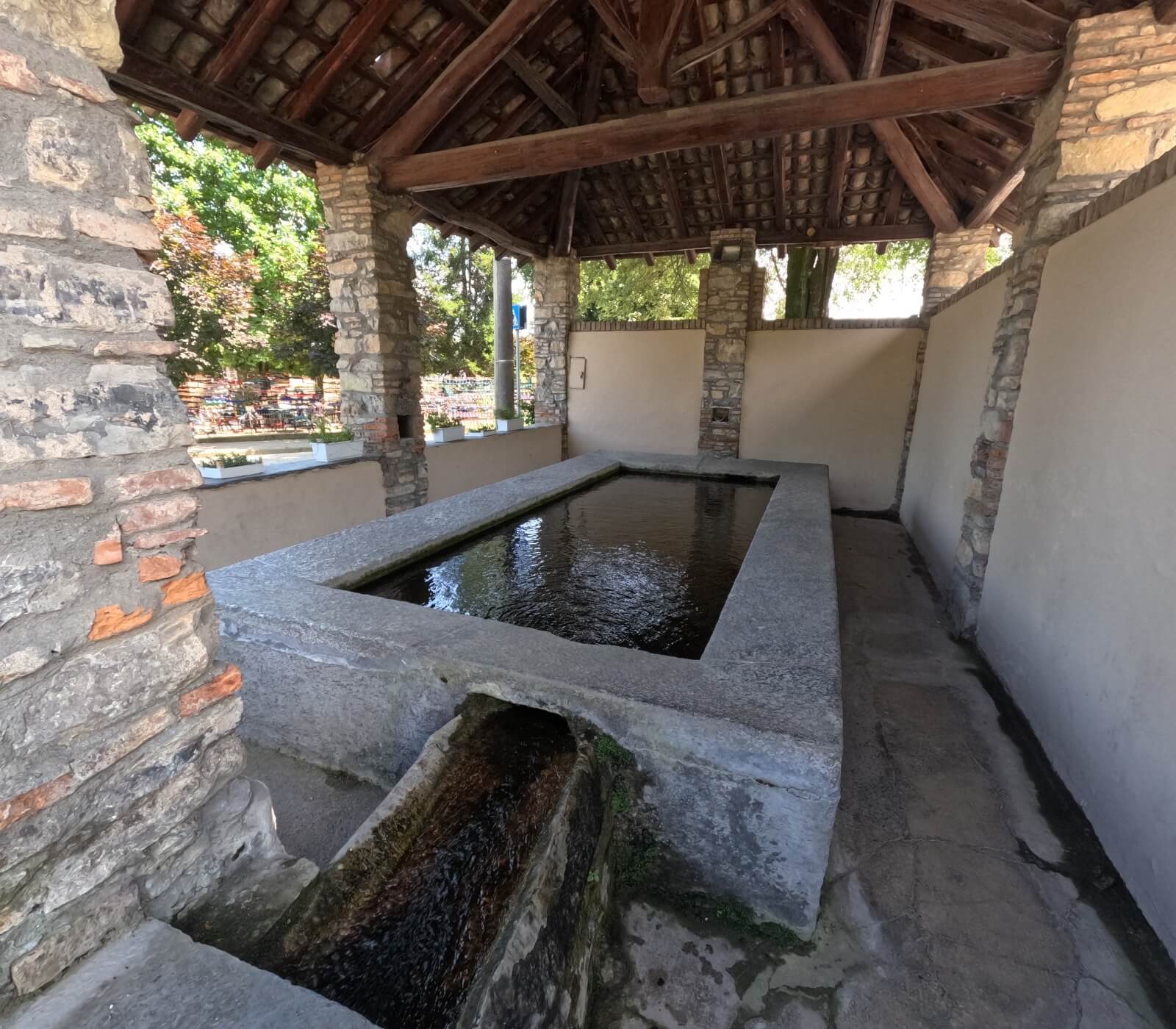
One notable historical site in Alserio is what is known as the ‘educational mill’, situated near the lake garden park. This open-air structure boasts a large iron and cast-iron grinding wheel dating back to the late-19th century. Inside this open structure, various agricultural tools and implements are on display. The mill, which once ground Alserio's ancient 'rostrato' (rostrum) corn, now serves as an educational attraction for visitors.
In August 1160, the nearby town of Carcano was the site of the Battle of Carcano-Tassera, where the Commune of Milan and its allies clashed with the imperial troops of Frederick I, Barbarossa, of the Holy Roman Empire. Following the destruction of the ancient manor by the Milanese consuls, the Church of San Dionigi was built nearby in the 13th century. Subsequent disputes between the Torriani and Visconti families involved many towns around Lake Alserio, with the victors allegedly securing fishing and navigation rights on the lake.
A historical record from 1380 notes that Gian Galeazzo Visconti relieved the inhabitants of Alserio from the onerous duty of supplying fresh fish to Milan free of charge, only then to appoint them as official fish suppliers to the courts of Milan and Pavia, this time for a fee. In 1500, Alserio was ceded to the Novati family, feudal lords of Monguzzo. In 1600, the town was ruled over first by the Giussani family and afterwards by the Imbonati.
The parish church of San Clemente, dedicated to the town's patron saint, was consecrated by Saint Charles Borromeo between 1580 and 1584. Believed to date back to the 12th century, the church houses the sepulchre of Count Carlo Imbonati, a former feudal lord of Alserio.
On Tassera hill stands Villa Adelaide, now known as Villa Cramer, a private residence owned by the Cramer family. The name "Adelaide" honours Adelaide Giannini, who received the villa as a gift from her husband Francesco Basevi in the mid-19th century. Built between 1844 and 1845, the estate includes stables and the Chapel of Santa Maria della Neve, all set within an English-style garden. This historic villa, which once hosted Umberto I, King of Italy, and his son, the future King Victor Emmanuel III, remains a splendid example of its era, also thanks to its wonderful interior decorations, and is an ideal venue for those seeking a charming wedding location amidst tranquil surroundings.
Lake Alserio exemplifies the successful preservation and enhancement of what is a natural heritage. From the town centre, visitors can quickly access the lake's walking and cycling trails. Almost as if to guard its boundaries, the lake is surrounded by lush vegetation and a rich biodiversity. Historically, fishermen set out from the old wharfs at dawn, returning with nets full of perch. Today, sailing on Lake Alserio is still possible, but only with non-motorized boats or canoes.
The lake's biodiversity is highlighted through workshops and events for visitors. An electric boat is available for excursions, allowing visitors to learn about the lake's flora and avifauna. Alserio offers peace, tranquillity, nature, excursions, sports, events, and art. Enjoy your stay!
Alserio, history and culture
The name "Alserio" is believed to derive from an ancient Gallic toponym connected to water. In the Gaulish language, the root "ser" is consistently associated with water, which, until this century, was the mainstay of the town’s economy. Fishing was the most developed and lucrative sector, while hydraulic power fuelled numerous mills, providing employment for many locals.
The area around Alserio played a significant role in the Battle of Tassera between Barbarossa and the Commune of Milan. In the 12th century, the conflict between the Torriani and Visconti families involved several towns around Lake Alserio, with the victors reportedly acquiring certain fishing and navigation rights on the lake. A historical record from 1380 notes that Gian Galeazzo Visconti relieved the inhabitants of Alserio from the onerous duty of supplying fresh fish to Milan free of charge, only then to appoint them as official fish suppliers to the courts of Milan and Pavia, this time for a fee.
In the 14th century, Alserio came under the control of the Bentivoglio family, and later, in 1500, it passed over to the Novati family, feudal lords of Monguzzo. In 1600, after the Giussani family, the Archintos acquired Alserio, and eventually, it came into the possession of the Imbonati family, thus extending their holdings as far as Carcano.
On Tassera Hill stands Villa Tassera, also known as Villa Adelaide, a 19th-century private residence owned by the Cramer family. The name "Adelaide" honours Adelaide Giannini, who received the villa as a gift from her husband Francesco Basevi in the mid-19th century. The estate includes a luxurious residence built between 1844 and 1845, an annex, a gatehouse, stables, and the Chapel of Santa Maria della Neve, all set within an English-style garden.
Among the town's historical and artistic sites, the beautiful parish church of San Clemente is noteworthy. Historical records indicate that it already existed in the 13th century and was formally established as a parish church during the time of Saint Charles Borromeo.
The Alserio Lake Nature Area
Located just 20 minutes from the city of Como, Lake Alserio is a prime example of how human efforts have managed to preserve and enhance the natural heritage of this area. From the centre of Alserio, visitors can access the lake's walking and cycling trails in just a few minutes.
The Nature Reserve encompasses the most pristine part of Lake Alserio, specifically its eastern shore. This part of the lake features a flat area traversed by its emissary and, in the southern section, by the Buerga slope and the hill of Monguzzo. The lake is primarily nourished by springs and modest seasonal irrigation ditches; its emissary flows into the Lambro River.
This area is of significant natural interest due to its diverse habitats, which support a variety of plant and bird species. Marshy areas around the lake are home to rare and intriguing plant species.
The lake's most notable faunal feature is its rich array of resident and migratory birds. Aquatic species include the Great Crested Grebe, Moorhen, Coot, and Mallard, while the reed beds are frequented by other bird species including the Grey Heron.
Surrounding the lake are abundant reeds and water lilies, which shield its surface. Testifying to the all-powerful nature of the place, history has it that, Barbarossa, while fleeing towards the castle of Montorfano, became lost in the lake's reeds and marshes and was only saved from drowning by his loyal squire. Consequently, the lake's natural features mean that access points are limited. Nevertheless, there are five historic wharfs along the shore, some of which can still be visited. These were once bustling with fishermen setting out at dawn to catch perch. Today, sailing is permitted only with non-motorized boats or canoes.
The biodiversity of this lake is also the focus of educational workshops for young people. An electric boat is available for excursions, offering visitors the chance to observe the lake's flora and avifauna and explore the contiguous woodland.